

Flea Control for Cats: What Every Owner Should Know
If you’ve spotted your cat scratching more than usual, or you’ve noticed tiny dark specks in their fur, flea control for cats probably just jumped to the top of your to-do list. Fleas are one of the most common problems cat owners deal with, and they can turn from a minor annoyance into a real health issue surprisingly fast.
The good news is this isn’t complicated once you understand how fleas operate and what actually works. This guide walks through how fleas affect cats, what to look for, practical prevention steps, common mistakes to avoid, and a few trusted product options if you’re ready to start treatment today.
Why Flea Control for Cats Matters More Than You Think
Fleas aren’t just an itchy inconvenience. A single flea can bite dozens of times a day, and an untreated infestation multiplies fast since female fleas can lay up to 50 eggs daily. For cats, this can lead to skin irritation, hair loss, and in cats with flea allergy dermatitis, intense discomfort from even a few bites.
Fleas can also transmit tapeworms if your cat swallows an infected flea while grooming, and in some cases, heavy infestations in kittens can lead to anemia. None of this is meant to alarm you, but it explains why staying ahead of fleas matters, especially if your cat spends any time outdoors or lives with other pets.
If you’re comparing treatment options, our guide to the best flea and tick medicine for cats can help you choose the right option for your cat.
Signs Your Cat May Have Fleas
Before jumping into treatment, it helps to know what you’re actually looking for. Common signs include:
- Frequent scratching, licking, or biting at their skin
- Small dark specks in their fur that look like pepper (this is flea dirt, essentially flea droppings)
- Red, irritated, or scabbed skin, especially around the neck and base of the tail
- Restlessness or difficulty settling down
- Visible fleas, which are small, fast-moving, reddish-brown insects
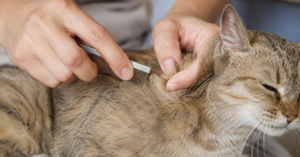
If you comb through your cat’s fur with a fine-toothed comb over a white paper towel and see dark specks that turn reddish-brown when dampened, that’s a strong sign of flea activity.
How Flea Treatments Actually Work
Most cat flea treatments fall into a few categories, and understanding the difference helps you choose the right one.
Topical Treatments
These are liquid treatments applied directly to your cat’s skin, usually between the shoulder blades. The active ingredients spread across the skin’s surface and kill fleas on contact, often within 24 hours. Most topical treatments need to be reapplied monthly.
Flea Collars
Modern flea collars work differently than the flea collars of decades past. Instead of a strong chemical smell, many now use a slow-release system that distributes active ingredients across your cat’s skin and coat continuously, often lasting several months per collar.
Oral Medications
Some flea treatments come as chewable tablets. These work systemically, meaning your cat’s blood becomes toxic to fleas after they bite. This method requires a flea to bite your cat before it takes effect, which is a key difference from topical and collar options that kill fleas on contact.
Top Picks for Flea Control
If you’re ready to start treatment, here are three well-regarded options, each suited to slightly different needs.
Seresto Cat Vet-Recommended Flea & Tick Collar, 8 Months Protection

This collar uses a slow-release formula that distributes two active ingredients across your cat’s skin and coat continuously for up to eight months. It starts killing existing fleas within 24 hours, and any new fleas that jump on afterward are killed within two hours, before they have a chance to lay eggs. It’s non-greasy, odorless, and water-resistant, making it a low-maintenance option if you want long-term protection without monthly reapplication. It’s best suited for cats and kittens at least 10 weeks old who tolerate wearing a collar comfortably.
TevraPet Actispot II Flea Treatment for Large Cats

This is a topical treatment that uses the same active ingredients found in a well-known brand-name option, at a lower price point. It kills fleas, flea eggs, and flea larvae, and starts working within 24 hours of application. Each package includes six doses, giving you roughly six months of monthly treatments. This option works well for cat owners who want proven, effective ingredients without paying a premium, and who don’t mind a monthly application routine.
Hartz UltraGuard Flea & Tick Collar for Cats and Kittens

This collar offers up to seven months of flea and tick protection and also targets flea eggs and larvae to help break the reproduction cycle. It’s water-resistant and includes a reflective strip, which adds a small safety benefit for cats that go outside in the evening. This is a solid budget-friendly option for cat owners looking for reliable, longer-term protection without a high price tag.
Practical Tips for Effective Flea Control
- Treat all pets in the household, not just the one showing symptoms. Fleas move between animals easily, and treating only one pet often means the infestation just continues elsewhere in the house.
- Wash your cat’s bedding weekly in hot water during an active infestation to kill any eggs or larvae hiding in the fabric.
- Vacuum frequently, especially carpets, rugs, and furniture your cat spends time on. Flea eggs and larvae often live in these areas, not just on your cat.
- Stay consistent with reapplication, since gaps in protection are one of the most common reasons treatments seem to “stop working.”
- Check with your vet before combining treatments, since using multiple flea products at once can sometimes cause adverse reactions.
Common Mistakes to Avoid
Using dog flea products on cats. This is one of the most dangerous mistakes a cat owner can make. Some ingredients that are safe for dogs, particularly certain topical treatments, can be toxic or even fatal to cats. The EPA’s guidance on flea and tick products explains this risk in more detail. Always check that a product is labeled specifically for cats.
Stopping treatment once symptoms improve.Fleas have a life cycle that includes eggs and larvae that can survive in your home for weeks. Stopping too early often leads to a second wave of fleas as dormant eggs hatch.
Only treating the cat, not the environment. A cat can be fully treated and still pick up fleas again if the home itself, carpets, furniture, bedding, isn’t also addressed.
Bathing immediately after applying a topical treatment. Many topical treatments need time to fully absorb into the skin. Bathing too soon can reduce their effectiveness significantly.
Ignoring mild symptoms. A few fleas can become a full infestation within weeks given how quickly they reproduce. Addressing early signs quickly makes the whole process easier.
FAQ: Flea Control for Cats
How often should I treat my cat for fleas? This depends on the product. Topical treatments are typically monthly, while collars can last anywhere from seven to eight months. Year-round prevention is generally recommended, even in colder months, since fleas can survive indoors regardless of outdoor temperature.
Can indoor cats get fleas? Yes. Fleas can hitch a ride into your home on clothing, shoes, or other pets, so indoor-only cats aren’t automatically protected.
Is it safe to use flea collars and topical treatments together? Not always. Combining flea products without guidance can increase the risk of an adverse reaction. It’s best to check with your veterinarian before using more than one type of treatment at once.
How long does it take to get rid of a flea infestation completely?
Because of the flea life cycle, it typically takes a few weeks of consistent treatment, both on your cat and in your home, to fully clear an infestation.
Are natural or home remedies effective against fleas?
Some natural methods may help as a supplement, but they’re generally not strong enough to fully control an established flea infestation on their own. Veterinarian-approved treatments remain the most reliable option.
Final Thoughts
Flea control for cats is much easier to manage with consistency and the right approach than most people expect. Understanding how fleas operate, recognizing the early signs, and sticking to a regular prevention routine will save you a lot of frustration compared to dealing with a full-blown infestation later.
If you’re ever unsure which approach is right for your cat’s age, weight, or health condition, a quick conversation with your veterinarian is always worth it. Staying proactive rather than reactive is really the biggest factor in keeping your cat comfortable and flea-free year-round.


